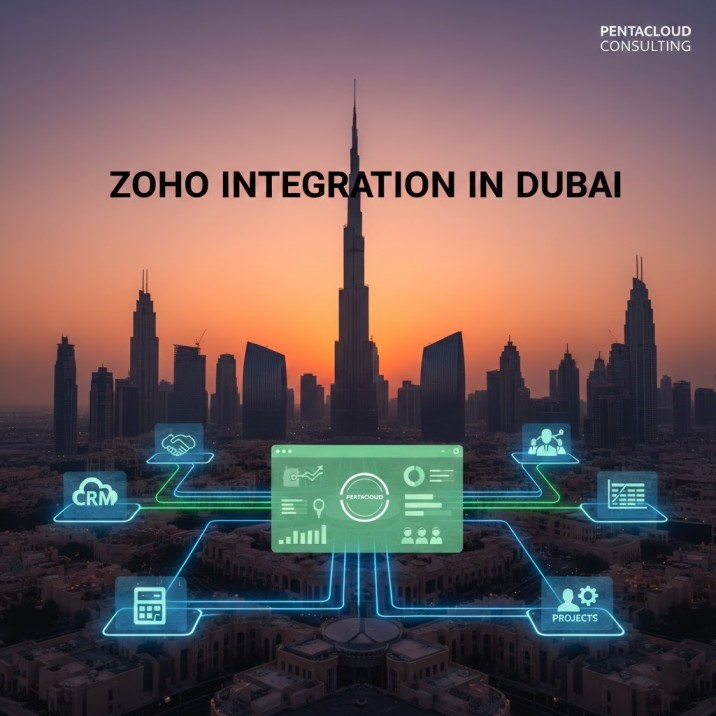
Zoho integration in Dubai is no longer optional for Indian startups and SMEs expanding into the UAE—it’s a strategic necessity. If you’re running a ₹50L–₹50Cr business from Bengaluru, Mumbai, or Delhi NCR and planning to scale in Dubai, you already know the chaos of disconnected systems. Sales runs on Zoho CRM. Accounting sits in Tally or Zoho Books. Payments flow through Razorpay. Operations? Maybe spreadsheets.
The problem is simple. Systems don’t talk to each other.
And when you expand to the UAE, the complexity multiplies—different work weeks, compliance requirements, free zone rules, and cross-border teams.
Based on patterns we’ve observed across cross-border implementations, businesses that prioritize structured Zoho integration in Dubai see faster operational clarity and fewer internal conflicts. This guide walks you through the exact framework Indian entrepreneurs use when selecting the right integration partner. You’ll learn what matters, what to avoid, and how to future-proof your tech stack.
As a Bengaluru-based consulting firm working with India-to-GCC expansions, Pentacloud Consulting often acts as the bridge between startup agility and enterprise-grade execution. Here’s what truly makes the difference.
Why Zoho integration in Dubai Is Critical for Indian Expansion
Expanding into Dubai isn’t just about registering a company. It’s about operational alignment.
Zoho integration in Dubai becomes essential when your India operations must sync with UAE sales, finance, and service workflows.
Cross-Border Process Alignment
Indian businesses operate Monday–Friday. Dubai teams often follow Sunday–Thursday. That alone creates workflow confusion.
Now imagine approvals stuck because systems aren’t synced.
A structured Zoho integration in Dubai ensures that CRM pipelines, inventory updates, and invoicing cycles flow seamlessly across time zones.
Consider this: A Pune-based manufacturing firm we studied expanded into a Dubai free zone. Without integration, their sales team in UAE closed deals that Indian operations couldn’t immediately fulfill. After integration between Zoho CRM, inventory modules, and accounting tools, order visibility became real-time.
No guesswork. No WhatsApp chaos.
Compliance & Data Considerations
Dubai businesses must consider VAT compliance and cross-border reporting. If your Zoho CRM doesn’t sync correctly with Zoho Books or ERP systems, reconciliation becomes painful.
Zoho integration in Dubai ensures automated tax calculations, invoice synchronization, and reporting consistency across entities.
That’s not convenience. That’s risk management.
7 Proven Wins of Smart Zoho integration in Dubai
Now that we’ve covered why it matters, let’s examine what winning businesses do differently.
1. Unified CRM and Finance Systems
Your CRM cannot operate in isolation.
Zoho integration in Dubai connects Zoho CRM with Zoho Books, inventory systems, and even Tally if required. This creates a single source of truth.
Here’s why:
Sales closes. Invoice auto-generates. Payment updates. Accounting reconciles.
No manual duplication.
2. Automated Lead-to-Cash Workflows
Indian entrepreneurs often rely on relationship-driven sales. That doesn’t change in Dubai. But automation must support it.
A proper Zoho integration in Dubai ensures that leads captured via website forms, WhatsApp Business, or events automatically flow into CRM, trigger follow-ups, and move into billing without manual intervention.
That’s speed. And speed wins markets.
3. Integration With Indian Tech Stack
Most SMEs in Hyderabad, Pune, or Mumbai use tools like:
- Tally
- Razorpay
- Zoho Books
- QuickBooks
- WhatsApp Business
Zoho integration in Dubai must respect your existing systems. The right partner doesn’t force replacement—they enable synchronization.
We’ve seen projects fail when consultants insisted on replacing functional Indian systems instead of integrating them.
4. Role-Based Access for Cross-Border Teams
Your Dubai sales team doesn’t need full financial visibility. Your India accounts team doesn’t need UAE marketing campaigns.
Smart Zoho integration in Dubai includes role hierarchies, territory management, and access control.
This reduces confusion and protects sensitive data.
5. Real-Time Reporting Across Entities
Entrepreneurs love dashboards. But inaccurate dashboards? Dangerous.
When Zoho integration in Dubai is done correctly, you get consolidated reporting across India and UAE entities. That includes:
- Sales performance
- Inventory movement
- Payment status
- Service tickets
And yes, GST and VAT separation.
6. API-Level Customization
Every business is different. A Delhi NCR enterprise might need custom approval chains. A Bengaluru SaaS startup might need subscription billing automation.
Zoho integration in Dubai should include API-based customization when needed—not just plug-and-play connectors.
7. Post-Integration Optimization
Here’s a reality check. Integration is not a one-time event.
Even experienced partners miss optimization opportunities after go-live. Businesses that succeed treat Zoho integration in Dubai as an evolving system, not a project with a finish line.
How to Evaluate a Zoho integration in Dubai Partner
Choosing the right integration partner is where many SMEs struggle.
Here’s what matters.
Certification Depth Matters
Does the partner have certified Zoho developers? Or just general CRM consultants?
Ask about:
- Zoho Creator expertise
- API integration experience
- Workflow automation capability
Certifications signal structured knowledge. Experience signals adaptability.
You need both.
Experience With India–UAE Expansion
Has the partner handled cross-border setups before?
Do they understand free zone vs mainland differences?
Do they know how Indian payment systems connect to UAE accounting?
Zoho integration in Dubai requires cultural and operational fluency. Not just technical skill.
Clear Implementation Roadmap
Ask for a phased plan. It should include:
- Discovery workshop
- System audit
- Integration mapping
- Testing phase
- User training
- Optimization window
In our advisory experience, projects without structured discovery fail faster.
Why? Because assumptions replace clarity.
Transparent Communication
You don’t need daily technical jargon. You need clarity.
A strong Zoho integration in Dubai partner explains complex architecture in simple language. They align with your decision-making pace and understand negotiation cycles common in Indian business culture.
Relationship-first. Outcome-focused.
Common Mistakes in Zoho integration in Dubai Projects
Let’s be honest. Not all implementations succeed.
Here are red flags.
Over-Customization
Too much customization makes future upgrades painful.
Zoho integration in Dubai should balance native capabilities with necessary customization.
Ignoring User Training
Even the best system fails if your team resists adoption.
A Mumbai-based service firm once invested heavily in integration but skipped structured training. Result? Sales teams reverted to spreadsheets.
That fear of resistance? It’s justified.
No Post-Go-Live Support
Integration without support is incomplete. Businesses evolving in Dubai’s competitive environment need periodic health checks.
Pentacloud’s Health Check framework, for example, evaluates workflow efficiency, automation gaps, and reporting clarity after implementation.
Because optimization never stops.
Zoho integration in Dubai vs Local UAE-Only Approach
Should you work with a Dubai-based partner only? Or consider an India-based team with GCC understanding?
Let’s explore.
Dubai-only partners bring local presence. That’s valuable.
However, many Indian entrepreneurs prefer working with teams that understand Tally, Razorpay, and Indian accounting realities alongside UAE compliance.
Zoho integration in Dubai becomes smoother when cultural fluency matches technical depth.
Pentacloud Consulting, headquartered in Bengaluru, operates as a bridge—combining enterprise-grade processes with startup-friendly accessibility. Agile engagement models. Strategy through implementation. And long-term enablement.
The key is alignment. Not geography.
Future-Proofing Your Zoho integration in Dubai Strategy
In 2025, businesses expect more from CRM systems. AI-powered insights, predictive analytics, and automation are becoming standard.
Zoho integration in Dubai should anticipate:
- AI-based lead scoring
- Automated service routing
- Cloud migration compatibility
- Multi-entity financial tracking
Initially, many businesses think integration is about connecting tools. After observing multiple projects, one insight stands out: integration is about clarity.
Clarity of data.
Clarity of roles.
Clarity of growth direction.
And clarity drives confident decisions.
Conclusion
Zoho integration in Dubai isn’t just about connecting software—it’s about building an operational backbone for cross-border growth. When CRM, finance, payments, and service systems align, your expansion into the UAE becomes structured instead of reactive.
The right partner combines technical expertise, India–GCC cultural understanding, and a phased implementation approach. Pentacloud Consulting supports Indian startups and SMEs through strategy, implementation, and ongoing optimization—acting as a practical bridge between ambition and execution.
If you’re planning expansion or already facing system disconnects, start with an audit. Map your workflows. Identify gaps. Then choose a Zoho integration in Dubai strategy that evolves with your business—not one that limits it.
Because growth should feel controlled. Not chaotic.
Ready to Modernize Your Cloud Architecture?
Connect with Pentacloud Consulting’s certified systems engineering team to run an exhaustive, data-backed operational assessment of your CRM ecosystem.
Request Architecture Discovery Session