
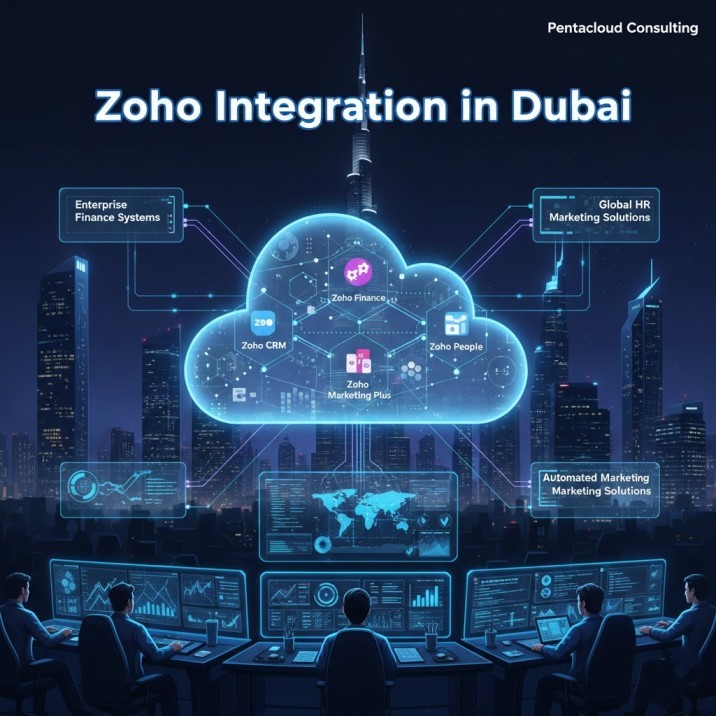
Zoho integration in Dubai is no longer just a technical requirement—it’s a business necessity for Indian startups and SMEs expanding into the UAE. As operations grow across borders, disconnected systems quickly become a bottleneck. Sales teams work in silos. Finance struggles with mismatched data. Leadership lacks real-time visibility. If this feels familiar, you’re not alone.
Many Indian businesses entering Dubai already use Zoho CRM, Zoho Books, or Zoho Creator. The assumption is simple: connect a few apps and move on. The reality is more complex. Dubai businesses operate with tighter reporting cycles, higher data accuracy expectations, and stricter role-based access. Recent CRM implementation reviews across the GCC show that a large share of integration failures stem from poor planning rather than platform limitations.
This guide explains Zoho integration in Dubai in a clear, structured way. You’ll learn what needs to be integrated, how Dubai-specific requirements change integration design, and what to evaluate when selecting a Zoho integration partner. We’ll also share real scenarios from cross-border projects and lessons learned along the way.
As Bengaluru-based consultants supporting Indian companies expanding into Dubai and the wider GCC, we’ve seen integrations succeed brilliantly—and fail quietly. This article gives you a decision framework to ensure yours falls into the first category.
Why Zoho Integration in Dubai Is Critical for Indian Businesses
When businesses scale into Dubai, operational complexity increases immediately.
Multiple Systems, One Business View
Dubai operations often involve CRM, accounting, inventory, HR, and third-party tools running simultaneously. Without proper Zoho integration in Dubai, teams rely on manual updates and duplicate data entry.
Faster Decision-Making Expectations
Leadership teams in Dubai expect dashboards that reflect live data. Integrations ensure Zoho pulls information from every critical system in near real time.
Reduced Operational Risk
Disconnected systems increase errors. Integrated Zoho environments reduce data mismatches, missed follow-ups, and reporting gaps.
Here’s why this matters: integration isn’t about convenience—it’s about control.
Understanding the Scope of Zoho Integration in Dubai
Not all integrations are equal, and clarity upfront avoids surprises later.
Internal Zoho App Integrations
Zoho CRM, Zoho Books, Zoho Desk, and Zoho Analytics often need to work as one system. Seamless internal integration ensures consistent customer and financial data.
External Business Systems
Indian SMEs commonly integrate Zoho with Tally, SAP, Oracle, payment gateways, and logistics tools. Dubai operations add regional tools into the mix.
Communication Platforms
WhatsApp Business integration is particularly important for Dubai sales and service teams, enabling faster customer engagement.
A successful Zoho integration in Dubai connects people, processes, and platforms—not just software.
Key Qualities to Look for Zoho Integration in Dubai Partners
Choosing the right partner is as important as choosing Zoho itself.
Business Understanding First
Strong partners start by understanding workflows before proposing integrations. Technology follows process—not the other way around.
Experience With Cross-Border Data Flows
Dubai integrations often involve data flowing between India and the UAE. This requires careful planning around access, compliance, and reporting.
Clear Documentation and Support
Integrations need maintenance. Partners who document logic clearly save you long-term headaches.
In our experience at Pentacloud Consulting, integration success improves dramatically when expectations are aligned early.
Zoho Integration in Dubai vs India-Centric Integrations
Many businesses ask whether they can reuse their Indian integration architecture.
Process Differences Matter
Indian workflows often allow flexibility. Dubai operations usually demand stricter sequencing and approvals.
Reporting Standards Are Higher
Dubai leadership expects clean, consolidated reports across departments. Integrations must support this without manual intervention.
Support Expectations
Dubai teams expect proactive system monitoring and quick issue resolution.
As a result, Zoho integration in Dubai often requires redesign rather than replication
Common Mistakes in Zoho Integration in Dubai Projects
Even experienced teams stumble here.
Integrating Too Much at Once
Trying to connect every system immediately increases risk. Phased integration works better.
Ignoring Error Handling
What happens when data sync fails? Many integrations break because error scenarios weren’t planned.
Skipping User Testing
Technical success doesn’t guarantee business success. Users must validate real-world workflows.
These mistakes are common—and avoidable.
How to Plan Zoho Integration in Dubai Step by Step
A structured approach reduces risk significantly.
Step 1: Integration Discovery
Map every system, data source, and dependency involved in your Dubai operations.
Step 2: Define Integration Priorities
Not all integrations are equally urgent. Start with revenue and reporting-critical systems.
Step 3: Design Data Flow Logic
Decide what data moves where, how often, and under what conditions.
Step 4: Build and Test Incrementally
Test each integration independently before connecting the full network.
Step 5: Monitor and Optimize
Integration performance must be reviewed regularly as usage grows.
This framework keeps complexity manageable.
Industry-Specific Zoho Integration in Dubai
Industry context changes everything.
- Manufacturing: CRM, inventory, and distributor data synchronization
- Healthcare: Controlled data exchange and audit visibility
- Finance: Accurate financial reporting across systems
- E-commerce: Real-time customer and order data flow
Tailored Zoho integration in Dubai improves adoption and trust across departments.
Why Indian-Led Teams Are Chosen for Zoho Integration in Dubai
There’s a clear shift toward Indian-led integration teams.
Cultural Alignment
They understand Indian leadership styles while adapting systems to Dubai professionalism.
Agile Delivery
Flexible engagement models suit startups and SMEs navigating growth uncertainty.
End-to-End Ownership
Fewer handoffs mean fewer integration failures.
This blend works well for Indian businesses entering the GCC.
Post-Integration Support: The Hidden Success Factor
Integration is not a one-time task.
Post-integration needs include:
- Monitoring data sync accuracy
- Adjusting logic as processes evolve
- Supporting new system additions
- Performing periodic health checks
Businesses that plan for ongoing support get consistent long-term value.
Conclusion
Zoho integration in Dubai is about creating a connected business system that supports growth, visibility, and confidence across borders. Indian startups and SMEs succeed when integrations are planned strategically, executed in phases, and supported continuously.
The right integration approach eliminates manual work, improves reporting accuracy, and enables faster decisions in the UAE market. Your next step should be clarity—understand your systems, define integration priorities, and work with partners who treat integration as a business enabler, not just a technical task.
When done right, Zoho integration in Dubai becomes the foundation for scalable, cross-border operations.