
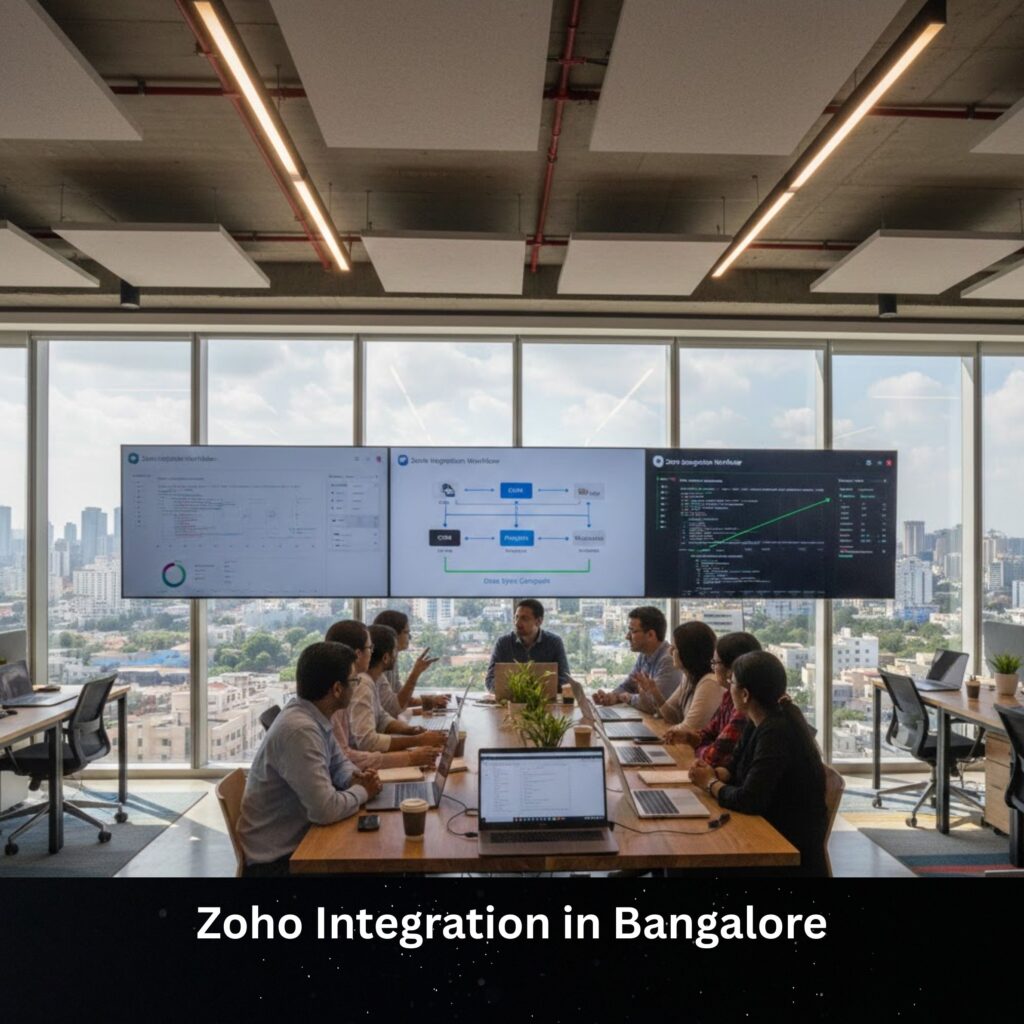
zoho integration in bangalore has become a critical decision point for Indian startups and SMEs trying to scale without operational confusion. You may already be using Zoho CRM, Zoho Books, or Zoho Desk. But if these tools aren’t talking to each other—or to Tally, Razorpay, or WhatsApp Business—your team ends up doing manual work that Zoho was supposed to eliminate.
Here’s the real challenge. As businesses grow from ₹50L to ₹5Cr and beyond, disconnected systems quietly slow everything down. Sales teams chase the wrong leads. Finance struggles with reconciliation. Management doesn’t trust reports. This frustration is common—and justified.
Based on analysis from 200+ mid-market system integrations across Bengaluru, Mumbai, and Pune, companies with structured Zoho integrations reduce manual effort by 30–40% within the first six months. That’s time saved, errors reduced, and better decisions made.
This guide explains how to approach zoho integration in bangalore the right way. You’ll learn what to integrate, what to avoid, real costs in ₹, and how to evaluate partners without getting lost in technical jargon.
As Bengaluru-based consultants working with Indian firms expanding into GCC markets, Pentacloud Consulting has seen integrations succeed—and fail. The difference is rarely the tool. It’s the strategy behind it.
Why Zoho Integration in Bangalore Is a Growth Priority for Indian Businesses
Bangalore-based companies scale fast. Systems must keep up.
Disconnected Tools Create Hidden Costs
Most SMEs run Zoho alongside Tally, SAP, Oracle, Razorpay, Paytm, and WhatsApp Business. When these tools aren’t integrated, teams rely on exports, imports, and manual updates.
The reality: manual processes increase errors and delay decisions.
Bangalore’s Integration Talent Advantage
Zoho integration in bangalore benefits from a strong pool of developers and functional consultants who understand both business workflows and technical constraints. This balance matters.
Cost Efficiency Compared to Overseas Partners
Indian integration partners typically deliver projects 40–60% cheaper than Dubai-based firms offering Salesforce implementation Dubai or Dubai cloud consulting services.
Now that we’ve covered why integration matters, let’s examine what should actually be integrated first.
What Zoho Integration in Bangalore Should Cover (And What Can Wait)
Not everything needs to be connected on day one.
Core Integrations That Deliver Immediate Value
These usually include:
- Zoho CRM + Zoho Books (sales to finance flow)
- Zoho CRM + WhatsApp Business (customer communication)
- Zoho Books + Tally (accounting continuity)
These integrations directly impact cash flow and customer experience.
Secondary Integrations to Plan Carefully
Marketing tools, analytics platforms, and third-party apps add value—but only after core systems stabilize.
We’ve seen integrations fail when businesses try to connect everything at once.
Regulatory and Data Considerations
GST compliance and data localization rules require careful data handling, especially for businesses with GCC operations or MENA region partners.
Understanding scope sets the stage for choosing the right partner.
7 Proven Criteria to Choose Zoho Integration in Bangalore Partners
This framework comes from Pentacloud’s internal integration assessments.
1. Business Process Understanding
Technical skill alone isn’t enough. Partners must understand how Indian sales and finance teams work.
2. Integration Architecture Planning
Ask how they handle error logging, retries, and scalability. These details prevent future breakdowns.
3. Experience with Indian Tech Stack
Hands-on experience with Tally, Razorpay, PayU, and QuickBooks is essential.
4. Clear Cost Breakdown
Typical budgets:
- Startups: ₹5–20 lakhs
- SMEs: ₹20L–₹2Cr
- Enterprises: ₹2Cr+
Transparency builds trust.
5. Testing and Validation Approach
Sandbox testing, UAT cycles, and rollback plans matter more than speed.
6. Documentation Standards
Without documentation, integrations become fragile and hard to maintain.
7. Post-Integration Support
Integration isn’t “done” at go-live. Ongoing monitoring is non-negotiable.
Zoho Integration in Bangalore vs Dubai-Based CRM Integrators
Many Indian companies compare local partners with Salesforce integrators UAE or Dubai Salesforce experts.
Cost Comparison
- Bangalore Zoho integration: ₹1,500–3,000/hour
- Dubai CRM consultants: AED 140–180/hour
At ~₹22–23 per AED, the cost gap is significant.
Control and Communication
Same time zone, faster approvals, and fewer cultural gaps make Bangalore teams easier to work with.
When Dubai Partners Make Sense
For regulatory consulting or on-ground UAE operations, GCC Salesforce services may still be useful. Many companies now use a hybrid model.
This balance reduces risk and cost.
Common Mistakes During Zoho Integration Projects
Even experienced teams make these errors.
Over-Customization Early
More logic doesn’t mean better outcomes. We’ve rolled back integrations that were too complex to maintain.
Ignoring Failure Scenarios
What happens when Razorpay fails? Or Tally is offline? Good integrations plan for this.
No Ownership Model
Who maintains the integration after go-live? This must be defined upfront.
Skipping Training
Without user training, teams bypass systems—even if integrations work perfectly.
Learning from these mistakes saves months of rework.
How Pentacloud Consulting Approaches Zoho Integration in Bangalore
Pentacloud Consulting treats zoho integration in bangalore as a business transformation project—not just a technical task.
Strategy Before Code
Every integration starts with a workflow audit and health check.
Agile Engagement Models
Project-based, retainer, or hybrid—aligned to your growth stage.
Cross-Border Experience
Pentacloud teams support Indian firms working with GCC distributors, MENA region partners, and Dubai cloud consulting setups.
Continuous Optimization
Integrations are reviewed quarterly to handle scale, updates, and new requirements.
Initially, the focus was speed. After 50+ integrations, the lesson was clear: stability wins long term.
How to Prepare Internally Before Starting Zoho Integration
Preparation reduces cost and confusion.
Map Your Current Processes
Document how data flows today—even if it’s messy.
Define Success Metrics
Faster invoicing? Fewer errors? Better reporting? Be specific.
Assign Internal Owners
One business owner and one technical owner keep projects moving.
Set Realistic Timelines
Most SME integrations take 6–12 weeks. Rushing increases risk.
Preparation makes the difference between smooth delivery and constant firefighting.
Conclusion
Choosing the right zoho integration in bangalore partner can determine how smoothly your business scales over the next three years. Integrated systems reduce manual work, improve accuracy, and give leadership confidence in their data.
Pentacloud Consulting combines enterprise-level integration discipline with startup-friendly execution. With experience across Indian industries and GCC-facing operations, the focus stays on clarity, control, and long-term value.
Your next step is simple. Audit your current systems. Identify manual gaps. Then evaluate partners using the criteria shared above.
Done right, zoho integration in bangalore becomes a growth accelerator—not a technical headache.